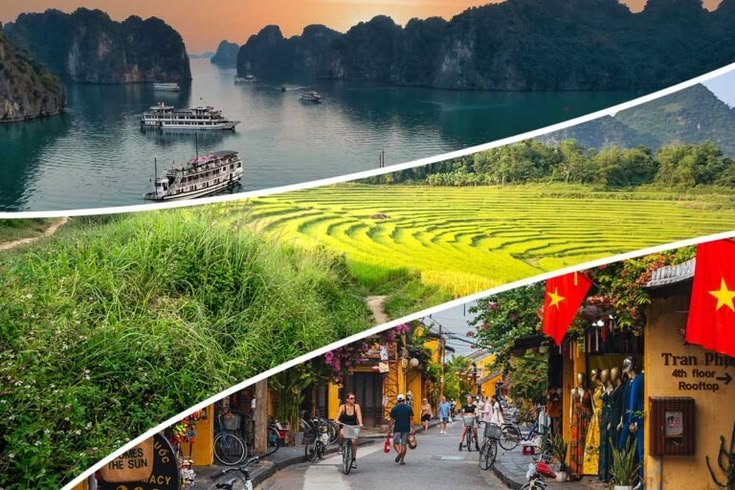
Vietnam is one of Southeast Asia’s most exciting travel destinations, offering beautiful beaches, vibrant cities, green rice terraces, historic towns, and delicious local food. Whether you want to explore Hanoi’s Old Quarter, cruise through Ha Long Bay, enjoy the beaches of Da Nang, or experience the energy of Ho Chi Minh City, choosing the right travel season can make your trip more enjoyable.
The best time to visit Vietnam from India generally depends on the region you plan to explore. February to April is a particularly good period for travellers visiting multiple regions, while November to April is generally favourable for southern Vietnam. Northern and central Vietnam have different weather patterns, so checking regional conditions before booking is important.
If you are planning a Vietnam trip from India in 2026, this guide explains the best months to visit, regional weather conditions, flight times, visa requirements, currency, and essential travel tips.
Quick Answer: What Is the Best Time to Visit Vietnam?
The best time to visit Vietnam depends on your itinerary and the experiences you want.
-
North Vietnam: October to April is generally suitable for cooler, drier weather. September and October are popular months for Sapa’s rice terraces.
-
Central Vietnam: February to August is generally favourable for beaches and outdoor activities, although conditions vary.
-
South Vietnam: November to April is usually the dry season, making it a popular time to explore Ho Chi Minh City, the Mekong Delta, and Phu Quoc.
-
Best for a multi-region trip: February to April is a useful starting point for planning a journey across northern, central, and southern Vietnam.
These are general seasonal patterns rather than guarantees. Rainfall, temperatures, and storm conditions can vary each year.
Vietnam Weather by Month: When Should You Visit?
Vietnam has a diverse climate because the country stretches across a long north-to-south distance. The north experiences more noticeable seasonal changes, central Vietnam has a distinct rainy season, and the south generally follows tropical wet and dry seasons.
Here is a practical overview of Vietnam’s weather and the experiences you can plan throughout the year.
| Month | General travel conditions | Best suited for |
|---|---|---|
| January | Cool in the north; generally dry in the south | City sightseeing and southern Vietnam |
| February | Generally favourable in many destinations | Multi-region trips and cultural sightseeing |
| March | Often pleasant across several regions | First-time visitors and outdoor activities |
| April | Warm weather in many areas | Beaches, sightseeing and regional travel |
| May | Hotter, with increasing rainfall in some areas | Beach trips and flexible itineraries |
| June | Hot and humid in many destinations | Coastal holidays and selected mountain trips |
| July | Hot, humid, with seasonal rain | Flexible travel and selected beach destinations |
| August | Rainy conditions in several regions | Travellers comfortable with weather changes |
| September | Transition periods and possible heavy rain | Sapa rice terraces and selected northern trips |
| October | Cooler conditions in the north; central rain risk | Northern sightseeing and mountain scenery |
| November | Generally favourable in the south; central rain risk | Ho Chi Minh City and the Mekong Delta |
| December | Cooler in the north and drier in the south; central weather varies | Festive travel and southern destinations |
Travel tip: Before finalising your dates, check the weather forecast for each destination on your itinerary. Vietnam does not have one single best travel month for every region.
Best Time to Visit North Vietnam: Hanoi, Ha Long Bay and Sapa
Recommended months: October to April for generally cooler, drier conditions.
Northern Vietnam is known for its historic cities, limestone landscapes, mountain scenery, and traditional villages. Hanoi, Ha Long Bay, and Sapa are among the most popular destinations in this region.
Hanoi
Hanoi is a great destination for exploring Vietnamese culture, historic streets, museums, lakes, and local food. October to April is generally suitable for sightseeing, although winter months can be cool and occasionally damp.
Visit the Old Quarter, explore Hoan Kiem Lake, and try local specialities while discovering the city's everyday life.
Ha Long Bay
Ha Long Bay is famous for its limestone islands, scenic boat cruises, kayaking, and overnight cruise experiences. October to April can offer comfortable conditions, but visibility, sea conditions, and cruise operations depend on the weather.
Storms and other adverse conditions can lead to cruise cancellations, particularly during periods of unsettled weather. Confirm your cruise schedule shortly before departure.
Sapa
Sapa attracts travellers looking for mountain views, trekking routes, village experiences, and terraced rice fields. September and October are popular months for seeing golden rice terraces, although harvest timing varies with local conditions.
For cooler weather and mountain scenery, late autumn and spring can also be appealing. Pack layers because temperatures in the mountains can differ significantly from those in Hanoi.
Who should visit North Vietnam? Travellers interested in culture, photography, mountain landscapes, hiking, and scenic cruises will find plenty to enjoy.
Best Time to Visit Central Vietnam: Da Nang and Hoi An
Recommended months: February to August for generally favourable beach conditions.
Central Vietnam offers sandy beaches, historical architecture, riverside towns, and a relaxed coastal atmosphere. Da Nang and Hoi An are particularly popular among Indian travellers.
Da Nang
Da Nang is known for My Khe Beach, coastal resorts, the Marble Mountains, and access to the surrounding countryside. February to August is generally a favourable period for beach activities and outdoor sightseeing.
The summer months can be hot, so schedule outdoor activities for the morning or late afternoon and carry water during the day.
Hoi An
Hoi An is famous for its lantern-lit streets, historic architecture, riverside scenery, tailor shops, and traditional Vietnamese food. The dry season is generally suitable for walking around the Ancient Town and exploring nearby beaches.
October to December can bring heavy rain, flooding, and possible typhoon-related disruption. If you travel during this period, keep your schedule flexible and monitor local weather alerts.
Who should visit Central Vietnam? This region is ideal for beach holidays, couples' trips, heritage experiences, family holidays, and travellers who enjoy a mix of relaxation and sightseeing.
Best Time to Visit South Vietnam: Ho Chi Minh City, Mekong Delta and Phu Quoc
Recommended months: November to April for generally drier weather.
Southern Vietnam has a tropical climate with relatively warm temperatures throughout the year. Its two broad seasons are the dry season and the rainy season.
Ho Chi Minh City
Ho Chi Minh City, also known as Saigon, is a lively destination with markets, museums, historic landmarks, modern shopping areas, and a diverse food scene.
The dry season is particularly convenient for walking tours, city sightseeing, rooftop experiences, and day trips. Popular attractions include the War Remnants Museum, Ben Thanh Market, and the city's historic architecture.
Mekong Delta
The Mekong Delta is known for its waterways, fruit orchards, local villages, and river-based experiences. November to April is generally a practical period for exploring the region with less frequent rainfall.
Boat trips and local tours may still be affected by changing water and weather conditions, so check arrangements before travelling.
Phu Quoc
Phu Quoc is a popular island destination known for beaches, resorts, sunsets, and water activities. November to April is generally the preferred period for a beach-focused holiday because conditions are often drier.
May to October is usually wetter, and rough seas or rain can affect some outdoor activities and boat excursions.
Who should visit South Vietnam? It is an excellent choice for food lovers, city explorers, beach enthusiasts, families, and travellers seeking a tropical getaway.
Which Region of Vietnam Should You Visit?
Use this comparison to choose a destination based on your travel dates.
| Region | Best months | Avoid / watch |
|---|---|---|
| North (Hanoi, Ha Long, Sapa) | October–April for generally cooler, drier conditions; September–October for golden Sapa terraces | June–August is hot and humid; storms during the summer and early autumn can affect Ha Long cruises |
| Central (Da Nang, Hoi An) | February–August for generally favourable beach weather | October–December can bring heavy rain and possible typhoons |
| South (Ho Chi Minh City, Mekong Delta, Phu Quoc) | November–April for the dry season | May–October is generally rainier, often with afternoon showers |
If you want to visit all three regions in one trip, February to April is a sensible period to consider. However, compare conditions for your exact destinations before confirming flights and hotels.
Vietnam Travel Essentials for Indian Travellers
Before booking your trip, understand the basic travel requirements, local currency, time difference, and flight arrangements.
| Travel essential | Key information |
|---|---|
| Flight time | Roughly 4–6 hours from some major Indian cities on direct routes; total travel time varies by departure city, airline, connections, and schedule |
| Time difference | Vietnam is 1 hour 30 minutes ahead of India |
| Currency | Vietnamese dong (VND); cards are accepted in many hotels and city businesses, but cash is useful for markets and smaller establishments |
| Climate zones | Northern Vietnam has more pronounced seasons, central Vietnam has distinct wet and dry periods, and southern Vietnam has tropical wet and dry seasons |
| Entry requirements | Indian passport holders generally need an approved visa to enter Vietnam. Check the latest requirements and apply through the official Vietnamese immigration portal |
1. Flights from India to Vietnam
Vietnam can be reached from major Indian cities, including Delhi and Mumbai, as well as other departure cities depending on airline schedules.
Direct flights on some routes may take approximately four to six hours. Connecting flights can take considerably longer, depending on the transit airport and waiting time.
Compare the total journey time, baggage allowance, arrival airport, and cancellation policy before purchasing your ticket.
2. Time Difference Between India and Vietnam
Vietnam follows Indochina Time (UTC+7), while India follows Indian Standard Time (UTC+5:30).
This means Vietnam is 1 hour and 30 minutes ahead of India. For example, when it is 10:00 AM in India, it is 11:30 AM in Vietnam.
The small time difference generally makes it easier for Indian travellers to adjust their daily schedules.
3. Currency and Payments in Vietnam
Vietnam's official currency is the Vietnamese dong (VND). Cash is useful for street food stalls, local markets, small shops, and certain rural destinations.
International debit and credit cards are accepted at many hotels, restaurants, and larger businesses, but acceptance varies. Check your bank's foreign transaction fees, notify your bank if required, and use reputable currency exchange services.
Keep small denominations available for everyday purchases and local transport.
4. Vietnam Visa Requirements for Indian Citizens
Indian passport holders generally need a visa to visit Vietnam. Vietnam offers an electronic visa option for eligible travellers, subject to current immigration rules and approval.
Before applying, verify the permitted length of stay, number of entries, passport validity requirements, entry and exit points, and application details through the official Vietnamese immigration website.
Do not assume that submitting an application guarantees approval. Apply in advance and check your approved visa details before travelling.
Read our Vietnam visa guide for Indians for additional information.
How Many Days Are Enough for a Vietnam Trip?
The ideal trip length depends on whether you want to explore one region or travel across the country.
-
4–5 days: Focus on one destination or a compact regional itinerary, such as Hanoi with a Ha Long Bay excursion.
-
6–8 days: Explore a combination such as Da Nang and Hoi An, or Ho Chi Minh City and the Mekong Delta.
-
9–12 days: Consider a multi-region trip with selected destinations in the north, central coast, and south.
-
13–15 days: Allow more time for several regions, mountain experiences, beach relaxation, and cultural activities.
Vietnam is geographically long, so avoid adding too many destinations to a short itinerary. Domestic flights can save time between distant regions, while trains and road transfers may suit shorter journeys.
What Should You Pack for Vietnam?
Your packing list should reflect the season and destinations you plan to visit.
-
Lightweight clothing: Useful in hot and humid conditions.
-
Comfortable walking shoes: Helpful for city sightseeing, historic areas, and excursions.
-
Rain jacket or compact umbrella: Particularly useful during the rainy season.
-
Warm layers: Important for northern Vietnam and mountain destinations during cooler months.
-
Sun protection: Pack sunscreen, sunglasses, and a hat for beach days and outdoor sightseeing.
-
Travel documents: Carry your passport, approved visa, flight details, hotel confirmations, and suitable travel insurance documents.
-
Payment options: Bring an appropriate mix of cards and cash.
Check the forecast before departure and adapt your packing to the specific regions you will visit.
Practical Tips for Planning Your Vietnam Trip from India
A well-planned itinerary can help you make the most of your time and budget.
Book flights and accommodation strategically. Compare prices across different dates and check whether your chosen destinations experience seasonal demand.
Plan around regional weather. If central Vietnam has a rainy forecast, consider adjusting your itinerary rather than relying entirely on beach activities.
Allow flexibility for cruises and boat trips. Weather-related cancellations can happen, so avoid placing an important onward flight immediately after a weather-sensitive excursion.
Research local transport. Compare domestic flights, trains, buses, and private transfers based on travel time, cost, and convenience.
Respect local customs. Dress appropriately when visiting religious sites, follow local rules, and ask before photographing people.
Check travel advisories and insurance. Review current entry rules, airline updates, weather alerts, and travel insurance coverage before departure.
Frequently Asked Questions About the Best Time to Visit Vietnam
1. What is the best time to visit Vietnam from India?
February to April is a useful period to consider for a multi-region Vietnam trip because conditions are often favourable in several destinations. However, the ideal month depends on whether you plan to visit the north, central coast, or south.
2. Which month is best for visiting Vietnam?
March is a good starting point for travellers who want to explore multiple regions. February, March, and April can all be suitable, but check the weather for your exact destinations before booking.
3. What is the cheapest month to visit Vietnam from India?
There is no universally cheapest month. Airfares and accommodation prices depend on departure city, holidays, demand, airline promotions, and local events. Compare flexible travel dates and check total trip costs rather than flight prices alone.
4. Is Vietnam suitable for Indian travellers during the monsoon?
Yes. Vietnam can be visited during the rainy season, but plans may need more flexibility. Rainfall often occurs in showers in the south, while central Vietnam can experience heavier rain and flooding during parts of autumn.
5. How many days are enough to explore Vietnam?
Around 9–12 days is a useful starting point for a multi-region trip. If you have only four to five days, focusing on one region is generally more practical.
6. Is Vietnam hot throughout the year?
Much of Vietnam is warm or hot for a significant part of the year, but temperatures vary by region. Northern Vietnam can be cool in winter, mountain destinations can be considerably colder, and the central coast and south have different seasonal patterns.
7. How far ahead is Vietnam from India?
Vietnam is 1 hour and 30 minutes ahead of India. When it is noon in India, it is 1:30 PM in Vietnam.
8. Do Indian citizens need a visa for Vietnam?
Indian passport holders generally need an approved visa. An electronic visa may be available to eligible travellers. Always confirm the current requirements through the official Vietnamese immigration portal before departure.
9. Is February a good time to visit Vietnam?
February can be a good month for a multi-region itinerary. However, temperatures in northern Vietnam can still be cool, and local holiday periods can affect transport, prices, and opening hours.
10. Which is better for a beach holiday: Da Nang or Phu Quoc?
Da Nang is generally worth considering from February to August for its beaches and access to Hoi An. Phu Quoc is generally most popular from November to April for its drier beach conditions. Your choice should also depend on the forecast, activities, and itinerary.
Final Thoughts
The best time to visit Vietnam from India depends on your travel priorities, budget, and chosen destinations. February to April is a useful starting point for a multi-region trip, October to April generally suits northern Vietnam, February to August is often favourable for the central coast, and November to April is popular for southern Vietnam.
Before booking, check the latest weather forecast, flight schedules, visa requirements, and local travel advisories. With the right timing and a realistic itinerary, you can enjoy Vietnam's landscapes, cultural experiences, beaches, and vibrant cities.
Ready to plan your Vietnam trip? Choose your preferred destinations, compare travel dates, and prepare your visa and travel documents early to make your journey smoother.